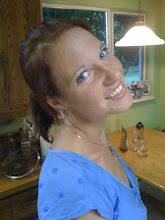
This is what this morning would have looked like, if you were here:
I would have made you a 4-egg omelet with baby spinach, ripe tomatoes and Havarti cheese nestled inside, sprinkled with freshly ground black pepper and topped with perfectly ripe avocado crescents. Then I'd serve you a coffee (perked, not french press because I can't find my precious stainless steel press at the moment though I'm sure it's in the house somewhere...) with cream and sit you down at the table and watch you eat.
Then, when I'm satisfied that you were well into enjoying your breakfast (no carbs, we're both trying to keep away from those delicious, crispy bread rolls I just got from Trader Joes -- oh, never mind let me throw one in the toaster for you.. the butter will tame the glycemic surge... ) I will sit beside you and regale you for the next 2 hours with stories from the amazing trip I just came back from. The kids I fell in love with, the scenes I saw, the pictures I took, the footage we shot, the beauty and majesty we absorbed...
Every day that I've been away, and every day that I've been back I've wanted to talk to you, to tell you the important things. So much has happened. I wish you'd been there with me to see it.
For example, there are two young horsemen -- the best of their group -- let's call them George (for Gorgeous George Clooney) and Leo (as in Lionheart.) They'd both been banned from taking part in horsemanship class as a punishment for cutting school. For three days they glumly sat on the sidelines watching all the other boys soaking up what they were prohibited from learning.
Leo chose to help out building bars on the gates of the pens so greedy horses wouldn't bust in when the others were feeding. George just sat and scowled, his handsome, engaging face becoming more sullen by the day. When time came for them to enter the class again, George, normally the best in the class, was oddly out of sync. He kept distracting the younger boys. Goofed off with his horse. Didn't show up in neat shirt and jeans. Wasn't the sunny, smiling boy we all knew him to be.
After 2 days of this, we asked him for an interview following the afternoon class. He sat on the stone steps, looking stormily at the darkening sky, answering in fragments and half-sentences, if not in single words. It wasn't until the end that he cracked, answering the question, "What do you find difficult in the horsesmanship classes?" He answered, that other boys might be better than me." When Ingela, who was asking him the questions, answered, "but George, you are one of the best in the class. Why are you worried about this?"
His face opened up and he looked like he might cry. "Because I couldn't be in the class the last few days, and they were all learning and getting ahead of me," he mumbled.
"George," Ingela said gently. "You are one of the best, if not the best. I know you will be one of the best horsemen in Brazil, one day. I am so proud of you and nothing you ever do can change that."
You could see his face struggling manfully not absorb her words at first, in order that they not penetrate into his heart and make him cry.
Ingela continued, "This is a big lie that you believe George. That you're not good at things. That you're not great."
"But I'm here to tell you that God sent me all this way from Canada to teach you, because you are great. Because God believes in you. Because you can do it."
George didn't look at her, still determined not to cry. But you could see it took everything in him, all the awareness of a camera lens in front of him, and of the three women around him, focussed only on him, to hold his emotion.
Later, walking with Ingela and the translator back to the room where the team was lodged, he softened and let her words enter, let them transform some cold, lonely place in his heart.
And after that, in the class and for every day after until the team left, George was his boyish, sunny, joyful self.
Tuesday, March 22, 2011
Friday, July 02, 2010
Still on the road, haven't found a home
We have been driving across Michigan for what feels like a week now. Really, it was only Thursday when we left Stratford, Ontario and headed for the Sarnia-Port Huron border. Today is Friday. But after a three-hour crawl at the bridge (why were so many Ontario-ans headed into the US on Canada day??) and then more traffic and delays today (stocking up on groceries, dipping toes in Lake Huron), we are taking what seems an eternity to get across this state.
Actually we're not really going across, but rather west and then north, and we'll cross into Wisconsin, then through Minnesota once we're north of Lake Huron. 'We' is my Dad - Robert, my little brother Matthew Elliott, and me. The two guys do all the driving and me? I sit back in the bland comfort of a beige-themed recreational vehicle, sipping water (or G & Ts), thinking about life.
I also read a lot: the latest issue of Maisonneuve magazine, in which I had foolishly hoped to be published this summer, Wally Lamb's The Hour I First Believed, and I'm hoping to start on Alexandr Solzhenitsyn's In the First Circle - the uncensored edition. But everything is heavy reading (AI, Singularity theory and the end of humanity in Maisonneuve, Lamb's is a novel about the hideous aftershocks of the Colombine massacre, and God only knows what horrors of Soviet control await in Solzhenitzyn!) so for a little break, I'm writing about myself.
Only…
It feels there is nothing much to write about. I am living through chaotic, colourful, life-changing events – but it seems to me they have already happened. In my head I've already been through it all, so what's the point of writing old news? I have long thought about my last year at Concordia University, and the last courses of my journalism degree. I've thought for a month about moving out of my little apartment near Atwater market, about which pieces of furniture I would take and which to leave, about what books I would give away and which would get shipped across the country to B.C., about who needed to be said goodbye to in person and who would be ok with an email, and about what last projects I needed to handle for Magnus Isacsson (filmmaker I work/intern for.)
In reality, I have been getting ready to leave Montreal since I arrived five years ago on a sunny August day, 2005. I was ready to leave when I first saw my drab apartment next to the deafening Decarie highway, and again when I found out what people at my secular university really think of christianity. When student politics and a newspaper nearly took over my life, my health and my peace of mind, dictating whether I slept or ate, I didn't consider leaving, but there wasn't much living going on either. I just existed for the next deadline, the next edition, the next workload. I lived for it because I felt my life was empty of any other meaning.
I didn't value what Montrealers held dear, nor did they care about what I valued. I felt at odds with the city, saddened by it, and mystified as to how to live at peace in it.
I got ready to leave Montreal for good two springs ago when Mom got sick with cancer and I knew she probably wouldn't outlast it. I didn't care about school or the paper at that point, handed the reins over to whoever came after me, and flew home to B.C.
And a year and a bit later when I returned to Montreal - crossing the miles in this same RV I'm in right now with only my Dad - a man shattered and shuttered by his wife's death - at the wheel, I left behind my newly discovered love, the Wildman, turned my face eastward again to face the fears of stress and strain, overwork and overload, the loss of direction I felt amid my more self-assured and hardworking news collaborators. When I got there I felt I stepped back into a city even more alien than the one I had left, and again I was preparing in my heart to leave.
To be fair, Montreal harboured me for awhile. And, thanks to this city, I learned things I never would have otherwise. I've met people I will be privileged to know my whole life. I learned about the true nature of a good bagel, what the World Cup does for Italians (and Brazilians, and Portuguese, and the French,) what people think about the Church as a whole (always with a capital "C", this church, always the institution, not the people) how to run more than 10 kms in the sun, how to push myself to write better and snappier (ok, not on this blog,) how to eat small amounts of food day or night, just enough to keep going, how to talk politics and new media and the democratization of communication until I'm blue in the face...
But Montreal has never been home to me.
I'm heading back to my native land now, back to my family ranch, to the Wildman and love, to pasturage and green fields, to cows and horses and the slow agricultural life, to long runs along country lanes, to working at my own pace, to feeling anchored and secure.
I don't know if it's "home" yet, but it will serve fairly well until I get there.
Actually we're not really going across, but rather west and then north, and we'll cross into Wisconsin, then through Minnesota once we're north of Lake Huron. 'We' is my Dad - Robert, my little brother Matthew Elliott, and me. The two guys do all the driving and me? I sit back in the bland comfort of a beige-themed recreational vehicle, sipping water (or G & Ts), thinking about life.
I also read a lot: the latest issue of Maisonneuve magazine, in which I had foolishly hoped to be published this summer, Wally Lamb's The Hour I First Believed, and I'm hoping to start on Alexandr Solzhenitsyn's In the First Circle - the uncensored edition. But everything is heavy reading (AI, Singularity theory and the end of humanity in Maisonneuve, Lamb's is a novel about the hideous aftershocks of the Colombine massacre, and God only knows what horrors of Soviet control await in Solzhenitzyn!) so for a little break, I'm writing about myself.
Only…
It feels there is nothing much to write about. I am living through chaotic, colourful, life-changing events – but it seems to me they have already happened. In my head I've already been through it all, so what's the point of writing old news? I have long thought about my last year at Concordia University, and the last courses of my journalism degree. I've thought for a month about moving out of my little apartment near Atwater market, about which pieces of furniture I would take and which to leave, about what books I would give away and which would get shipped across the country to B.C., about who needed to be said goodbye to in person and who would be ok with an email, and about what last projects I needed to handle for Magnus Isacsson (filmmaker I work/intern for.)
In reality, I have been getting ready to leave Montreal since I arrived five years ago on a sunny August day, 2005. I was ready to leave when I first saw my drab apartment next to the deafening Decarie highway, and again when I found out what people at my secular university really think of christianity. When student politics and a newspaper nearly took over my life, my health and my peace of mind, dictating whether I slept or ate, I didn't consider leaving, but there wasn't much living going on either. I just existed for the next deadline, the next edition, the next workload. I lived for it because I felt my life was empty of any other meaning.
I didn't value what Montrealers held dear, nor did they care about what I valued. I felt at odds with the city, saddened by it, and mystified as to how to live at peace in it.
I got ready to leave Montreal for good two springs ago when Mom got sick with cancer and I knew she probably wouldn't outlast it. I didn't care about school or the paper at that point, handed the reins over to whoever came after me, and flew home to B.C.
And a year and a bit later when I returned to Montreal - crossing the miles in this same RV I'm in right now with only my Dad - a man shattered and shuttered by his wife's death - at the wheel, I left behind my newly discovered love, the Wildman, turned my face eastward again to face the fears of stress and strain, overwork and overload, the loss of direction I felt amid my more self-assured and hardworking news collaborators. When I got there I felt I stepped back into a city even more alien than the one I had left, and again I was preparing in my heart to leave.
To be fair, Montreal harboured me for awhile. And, thanks to this city, I learned things I never would have otherwise. I've met people I will be privileged to know my whole life. I learned about the true nature of a good bagel, what the World Cup does for Italians (and Brazilians, and Portuguese, and the French,) what people think about the Church as a whole (always with a capital "C", this church, always the institution, not the people) how to run more than 10 kms in the sun, how to push myself to write better and snappier (ok, not on this blog,) how to eat small amounts of food day or night, just enough to keep going, how to talk politics and new media and the democratization of communication until I'm blue in the face...
But Montreal has never been home to me.
I'm heading back to my native land now, back to my family ranch, to the Wildman and love, to pasturage and green fields, to cows and horses and the slow agricultural life, to long runs along country lanes, to working at my own pace, to feeling anchored and secure.
I don't know if it's "home" yet, but it will serve fairly well until I get there.
Wednesday, February 10, 2010
Why I was a crappy newsperson
A lot has happened this week in terms of job/career orientation. I didn’t get the grant I was hoping for, the one that would have enabled me to go to Mozambique this summer and report on development issues for different streams of media. After a long wait we submitted our applications in November and heard back in early February – I’m less disappointed than I expected to be.
(This
is a photograph from the inside of an abandoned CN building on the edge of the Lachine Canal. It's where I photographed Michael Pinet, a young man squatting there for nine months. - Tobi Elliott)
Hingeing my hopes on it in December, I thought my life would be over if I didn’t get it. At that point I had no prospects, no idea of what I want to do after school, no confidence that I’d be able to make money or get a job doing what I love. In fact, I didn’t even know what I loved, or where to even start looking for employment doing -- whatever. It was all a mish mash of hopeless confusion, which pretty much sums up the four years I've spent in Montreal.
Production has always been very high on my priority list (I don’t know how to say this without being cliched.) At the end of the day (another cliche, sorry) if I can’t produce something in terms of a finished article, a plate of good food, a shoot that went well, an actual hardcopy of something that wouldn’t exist if I hadn’t put brains and brawn to it, then I don’t feel alive. Already a producer, now I'm beginning to narrow down what I want to produce.
Also, I'm starting to enjoy the act of writing again. This may seem seems unrelated to film production but it's not. They are actually inextricably linked because producing films is just one, long, protracted, agonizing, step-by-step act of listening and writing... writing many acts, putting together many scenes, writing in changes, editing and re-writing. You’re just using ears and eyes in a different way. The result looks different, but you need writing skills in both.
After years of being in a cold winter of having nothing to say, I'm putting aside time that I used to spend doing other useless things, and starting to write for an audience again because I'm coming across stories that matter. Michael was a big part of that, you can see that story on my other blog. I realized that I do really well when I can tell stories that make a difference in people's lives, stories that don't exploit them for my own gain. More on that in the third part.
Secondly, I want to have a production company so I can buy lots of expensive equipment. I kid you not. The only things in life I that I really enjoy spending money on are food, magazines of the literary persuasion (or the Sunday New York Times, yum!), and computer stuff. If I had a production company I could spend lots of dough on software, cameras, soundboards, cables, dollies, the list goes on. I could see myself spending lots of money, and having fun doing it. I think that’s important in life. If you work hard, make money, you should be able to spend it on things you want to. For example, I never cottoned on to the idea of paying down a mortgage to own a house. Houses are not a priority for someone who just wants to travel. I know real estate is a good investment but honestly, I would be much happier buying a van and living out of that, or a houseboat. And a storage locker to put all my nice expensive camera equipment in.
And thirdly, I’ve discovered I have an actual skill that will enable me to tell great stories. It's possibly my only qualification or talent as a writer or reporter. I suck at research, I'm not interested in hard news or blood or guts and accident scenes, and I really am not interested in the big issues that torment the media on a day-to-day basis.
In all modesty, I must confess that the only thing I'm truly talented at is making that essential connection with people, without which it’s impossible to get a good story. Frankly, I’m not a “big picture” person, I'm all about the individual. Issues, schm-issues. I can only concentrate on one person at a time, and I get wildly excited about their dreams and vision, totally caught up in their struggle and challenge, and that’s all that matters to me. That is my universe for the day. Then, when it’s recorded or written or photographed, I am content and can move on. I’ve done my job.
Making the personal connection with each individual is a quality so essential in journalism we take it for granted. It's the one thing they can’t teach in school. There, they teach you how to structure a classic inverted pyramid news story, then how to write the classic anecdotal lead. The nut graph. The backed-in lead. I learned how to shoot a straight news piece, how to do longer form. I learned how to use different audio recorders, three-point lighting, to position mics and use a boom. I learned layout programs and film editing software... all these mechanical skills.
But I was frustrated because while I could DO anything – I can shoot, write, edit, record, package – I wasn't particularly good at any of them. I couldn't find my metier, my art. The only thing I was good at is making the connection, but I didn't realize it for a long time.
Because that was never emphasized or even talked about in class, I thought every day I must be crazy for going into journalism. None of this stuff they were teaching really fit, really mattered to me. It's mind-boggling to think about it now, but I really thought I couldn't be a good journalist because what I was learning in school and the workforce was how to use people in order to get to the story, so you could keep your job in an ever-narrowing workforce. (It’s actually not narrowing but widening, but that’s a story for another post.) It was all fear-based. Fear is the driver that keeps you motivated, keeps you on top of your sources, and fear of the competition getting the story first drove everything else. It's enough to make you want to go mad. In that exploitative equation there was no room for respect for the person and the subject of your story. It was all about you, getting your story, and getting it on the air or published.
So I felt pretty hopeless for most of my time here. I felt like the only real skill I had – connecting with people and making them feel important and valued – was no use in this field. And I tried hard, I really did. I tried to be cut-and-dried and all business, to get in there, get the story and get out. To use whatever words I had to in order to persuade someone to open up, so I could record their soundbite and get the hell out of there.
But it’s a shitty way to operate if you want to stay human... if you want to keep your heart. Operating in “the news” can actually kill a person’s soul, although there are a few good ‘uns, mostly older broadcasters, who seem to have been able to hang on to theirs.
On the other hand, telling stories, or “doing journalism” or whatever you want to call it, lets you keep your soul. It grows it. As you become connected to others, hearing who they are and where they come from, really listening... you learn, you grow, you expand your knowledge of humanity.
And that’s what I’m all about, folks. Thank God I discovered it before it was too late.
(This
Hingeing my hopes on it in December, I thought my life would be over if I didn’t get it. At that point I had no prospects, no idea of what I want to do after school, no confidence that I’d be able to make money or get a job doing what I love. In fact, I didn’t even know what I loved, or where to even start looking for employment doing -- whatever. It was all a mish mash of hopeless confusion, which pretty much sums up the four years I've spent in Montreal.
Production has always been very high on my priority list (I don’t know how to say this without being cliched.) At the end of the day (another cliche, sorry) if I can’t produce something in terms of a finished article, a plate of good food, a shoot that went well, an actual hardcopy of something that wouldn’t exist if I hadn’t put brains and brawn to it, then I don’t feel alive. Already a producer, now I'm beginning to narrow down what I want to produce.
Also, I'm starting to enjoy the act of writing again. This may seem seems unrelated to film production but it's not. They are actually inextricably linked because producing films is just one, long, protracted, agonizing, step-by-step act of listening and writing... writing many acts, putting together many scenes, writing in changes, editing and re-writing. You’re just using ears and eyes in a different way. The result looks different, but you need writing skills in both.
After years of being in a cold winter of having nothing to say, I'm putting aside time that I used to spend doing other useless things, and starting to write for an audience again because I'm coming across stories that matter. Michael was a big part of that, you can see that story on my other blog. I realized that I do really well when I can tell stories that make a difference in people's lives, stories that don't exploit them for my own gain. More on that in the third part.
Secondly, I want to have a production company so I can buy lots of expensive equipment. I kid you not. The only things in life I that I really enjoy spending money on are food, magazines of the literary persuasion (or the Sunday New York Times, yum!), and computer stuff. If I had a production company I could spend lots of dough on software, cameras, soundboards, cables, dollies, the list goes on. I could see myself spending lots of money, and having fun doing it. I think that’s important in life. If you work hard, make money, you should be able to spend it on things you want to. For example, I never cottoned on to the idea of paying down a mortgage to own a house. Houses are not a priority for someone who just wants to travel. I know real estate is a good investment but honestly, I would be much happier buying a van and living out of that, or a houseboat. And a storage locker to put all my nice expensive camera equipment in.
And thirdly, I’ve discovered I have an actual skill that will enable me to tell great stories. It's possibly my only qualification or talent as a writer or reporter. I suck at research, I'm not interested in hard news or blood or guts and accident scenes, and I really am not interested in the big issues that torment the media on a day-to-day basis.
In all modesty, I must confess that the only thing I'm truly talented at is making that essential connection with people, without which it’s impossible to get a good story. Frankly, I’m not a “big picture” person, I'm all about the individual. Issues, schm-issues. I can only concentrate on one person at a time, and I get wildly excited about their dreams and vision, totally caught up in their struggle and challenge, and that’s all that matters to me. That is my universe for the day. Then, when it’s recorded or written or photographed, I am content and can move on. I’ve done my job.
Making the personal connection with each individual is a quality so essential in journalism we take it for granted. It's the one thing they can’t teach in school. There, they teach you how to structure a classic inverted pyramid news story, then how to write the classic anecdotal lead. The nut graph. The backed-in lead. I learned how to shoot a straight news piece, how to do longer form. I learned how to use different audio recorders, three-point lighting, to position mics and use a boom. I learned layout programs and film editing software... all these mechanical skills.
But I was frustrated because while I could DO anything – I can shoot, write, edit, record, package – I wasn't particularly good at any of them. I couldn't find my metier, my art. The only thing I was good at is making the connection, but I didn't realize it for a long time.
Because that was never emphasized or even talked about in class, I thought every day I must be crazy for going into journalism. None of this stuff they were teaching really fit, really mattered to me. It's mind-boggling to think about it now, but I really thought I couldn't be a good journalist because what I was learning in school and the workforce was how to use people in order to get to the story, so you could keep your job in an ever-narrowing workforce. (It’s actually not narrowing but widening, but that’s a story for another post.) It was all fear-based. Fear is the driver that keeps you motivated, keeps you on top of your sources, and fear of the competition getting the story first drove everything else. It's enough to make you want to go mad. In that exploitative equation there was no room for respect for the person and the subject of your story. It was all about you, getting your story, and getting it on the air or published.
So I felt pretty hopeless for most of my time here. I felt like the only real skill I had – connecting with people and making them feel important and valued – was no use in this field. And I tried hard, I really did. I tried to be cut-and-dried and all business, to get in there, get the story and get out. To use whatever words I had to in order to persuade someone to open up, so I could record their soundbite and get the hell out of there.
But it’s a shitty way to operate if you want to stay human... if you want to keep your heart. Operating in “the news” can actually kill a person’s soul, although there are a few good ‘uns, mostly older broadcasters, who seem to have been able to hang on to theirs.
On the other hand, telling stories, or “doing journalism” or whatever you want to call it, lets you keep your soul. It grows it. As you become connected to others, hearing who they are and where they come from, really listening... you learn, you grow, you expand your knowledge of humanity.
And that’s what I’m all about, folks. Thank God I discovered it before it was too late.
Labels:
Career,
Journalism,
Making it Work,
Montreal,
News,
Work
Subscribe to:
Posts (Atom)
